Who it may help
Varicoceles are relatively common and are often found during a fertility assessment or an evaluation of scrotal discomfort. Many men with a varicocele have no symptoms and do not need surgery. The presence of a varicocele also does not automatically explain every fertility problem.
Repair may be considered for selected patients, for example:
- Men with a varicocele that can be felt on examination, infertility and abnormal semen parameters, where the couple’s wider fertility situation supports treatment
- Men with persistent scrotal aching or heaviness that is consistent with a varicocele, after other causes have been considered
- Adolescents or young men with specific findings, such as reduced testicular growth on the affected side, in carefully selected cases
- Selected men with very low sperm counts, where repair is discussed as part of a broader fertility plan
Surgery is not recommended simply because a small, non-palpable varicocele appears on an ultrasound. For more background, read Can Varicocele Affect Male Fertility?.
Assessment before treatment
Assessment begins with a detailed history and a physical examination, ideally while standing, to assess the veins and the size and consistency of the testes. Depending on the findings, Dr. Osamah may recommend:
- Semen analysis, usually repeated, to understand sperm parameters
- Hormone testing in selected men
- Scrotal ultrasound with Doppler when examination is inconclusive or other findings need clarification
- Review of the female partner’s fertility evaluation and age, as this strongly influences whether repair, assisted reproduction or both are most sensible
For men whose main concern is pain, the assessment also looks for other possible sources, as described on our testicular pain page.
The procedure / approach
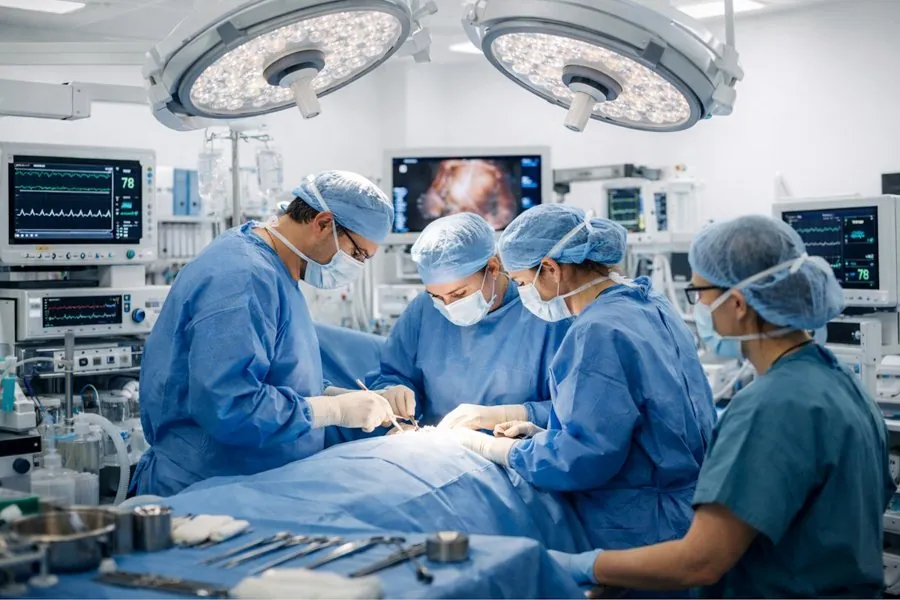
Microsurgical varicocelectomy aims to tie off the abnormal veins that drain the testis while preserving the testicular artery, lymphatic channels and the vas deferens. The surgeon makes a small incision in the groin or just below it and uses an operating microscope to identify and protect these important structures.
The microsurgical approach is chosen because magnification helps the surgeon distinguish veins from arteries and lymphatics, which may help reduce some complications. Other approaches, such as radiological embolization, exist and may be appropriate for some patients; Dr. Osamah can explain how they compare.
The procedure is performed at the clinic or, for selected procedures, at an affiliated hospital. The type of anesthesia is discussed with you beforehand: most procedures in Dr. Osamah’s practice are performed under local anesthesia at the clinic, while selected procedures take place at affiliated hospitals with sedation.
Varicocele repair does not guarantee improved sperm parameters, pregnancy or complete pain relief. Some men see no change, and a varicocele can recur. For some couples, observation or assisted reproduction may be more appropriate, and these alternatives should be discussed before surgery.
Benefits and limitations
Potential benefits in selected patients may include:
- Improvement in semen parameters over time
- Relief of varicocele-related aching or heaviness
- A possible role in protecting testicular function in specific situations
Limitations to keep in mind:
- Any change in sperm production takes months to appear, because sperm develop over a long cycle
- Results vary between individuals
- For couples with time-sensitive fertility factors, waiting for possible improvement may not be ideal
Possible risks
Possible risks include:
- Recurrence or persistence of the varicocele
- Hydrocele, a collection of fluid around the testis
- Bleeding, bruising or wound infection
- Injury to the testicular artery or vas deferens, which is uncommon but important to understand
- Ongoing discomfort in some men
- Risks related to anesthesia
Recovery and follow-up
Discharge and aftercare arrangements are explained to you before the procedure. Mild discomfort is common and is usually managed with simple pain relief, scrotal support and rest. Light activity is typically resumed within days, while strenuous exercise, heavy lifting and sexual activity are paused for a period your surgeon will advise.
Follow-up includes a wound check and, for fertility patients, repeat semen analysis after several months. Dr. Osamah reviews the results alongside your partner’s fertility plan to decide on the next steps.
Frequently asked questions
Does every varicocele need surgery?
No. Many varicoceles cause no symptoms and are simply observed. Repair is considered when there is a clear clinical reason, such as infertility with abnormal semen parameters or persistent related pain.
How soon could sperm results change after repair?
If changes occur, they usually take months, because sperm production follows a long cycle. Repeat semen testing is typically arranged a few months after surgery.
Can a varicocele come back after treatment?
Yes, recurrence is possible after any method of repair. The microsurgical technique is designed to identify veins carefully, but no approach can eliminate this risk completely.
Should we consider IVF instead of repair?
It depends on your situation, including the female partner’s age and fertility findings. In some couples, assisted reproduction may be more suitable, and Dr. Osamah will discuss the options with you and, where helpful, your fertility team.